
Phototherapy for Psoriasis: Types, Benefits, Risks, and Costs
Phototherapy, or light therapy, uses controlled doses of ultraviolet (UV) light to reduce inflammation and slow excessive skin-cell growth. It is commonly used to treat psoriasis and may also help manage conditions such as eczema.
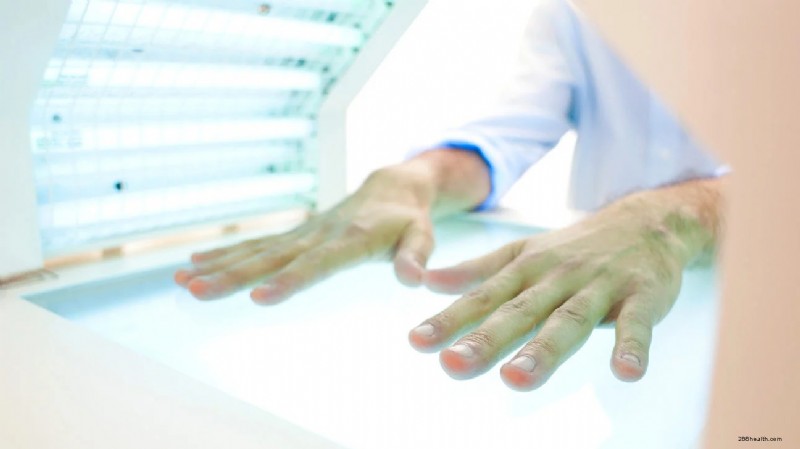
For some people, over-the-counter or prescription creams are enough to control psoriasis. If symptoms remain itchy, scaly, or red, phototherapy may be another option. A dermatologist can determine whether you are a suitable candidate and whether UV therapy should be combined with topical medication.
How phototherapy works
Phototherapy is not simply a substitute for spending time in the sun. Medical light therapy uses specific UV wavelengths, carefully controlled doses, and protective measures to treat affected skin while limiting unnecessary exposure.
Types of phototherapy for psoriasis
Narrowband ultraviolet B (NB-UVB)
NB-UVB is the most commonly used form of phototherapy. It can treat plaque psoriasis, the most common type, as well as guttate psoriasis. NB-UVB lamps and bulbs emit wavelengths between 311 and 313 nanometers.
Your starting dose will depend on your skin type and how easily your skin burns or tans. Treatment is generally performed two or three times a week, followed by weekly maintenance sessions after the skin clears.
In a 2017 study, about 75% of people receiving NB-UVB reported clear skin or minimal symptoms. They also needed fewer prescription creams. NB-UVB may work better when combined with topical treatments such as vitamin D analogs or corticosteroids.
Broadband ultraviolet B (BB-UVB)
BB-UVB is an older form of phototherapy that emits a broader range of wavelengths, between 270 and 390 nanometers. It resembles NB-UVB but is generally considered less effective.
Because of this, BB-UVB is usually reserved for people who cannot use NB-UVB. It may be prescribed alone or with the retinoid acitretin, sold as Soriatane. Combining the treatments may clear the skin faster while allowing a lower UVB dose.
Targeted ultraviolet B therapy
Targeted UVB therapy is applied only to small areas of the body using an excimer laser, excimer light, or NB-UVB. It may be appropriate when psoriasis affects less than 10% of your body surface area.
Because only affected skin is exposed, this approach delivers fewer UV rays overall. It may reduce side effects and health risks and can clear localized plaques faster. Treatments are commonly scheduled two or three times per week.
Psoralen plus ultraviolet A (PUVA)
PUVA combines UVA light with psoralen, a medication that makes the skin more sensitive to light. Psoralen may be:
- taken orally
- mixed into bathwater
- applied to the skin
PUVA is highly effective but is not widely used or available. Oral PUVA has the greatest risk of medication interactions and side effects, including nausea, but it may work best when combined with an oral retinoid. Research also suggests that bath PUVA may be less effective than oral PUVA.
Which form of light therapy works best?
According to 2019 treatment guidelines from the American Academy of Dermatology and the National Psoriasis Foundation, PUVA is the most effective major form of phototherapy for psoriasis. The next most effective options are NB-UVB, targeted UVB therapy, and BB-UVB.
Despite this ranking, dermatologists more often recommend NB-UVB because it is less expensive, easier to administer, and associated with fewer side effects. Its effectiveness may also improve when combined with other medications.
Some studies indicate that PUVA produces greater improvement overall. In one study, more than 70% of people receiving oral psoralen with UVA achieved a 75% improvement in their Psoriasis Area and Severity Index score. People with darker skin tones may require higher initial doses to obtain a comparable response.
What to expect during treatment
The required dose and treatment area depend on how extensive your psoriasis is and where it appears. Therapy may target only affected areas or involve the full body. Before each session, a technician will cover sensitive areas and may recommend that you avoid applying salicylic acid, which can reduce the treatment’s effectiveness.
If you are receiving UVA therapy, you may need to take or apply psoralen before your appointment. Most people attend several sessions per week for one to three months, although the exact schedule varies by person and treatment type. A typical session lasts about 15 minutes.
At-home NB-UVB therapy
For selected people with plaque psoriasis, home NB-UVB therapy can be an alternative to treatment in a clinic. It may be used for mild, moderate, or severe disease and can make long-term treatment more convenient.
A 2016 study found that undergoing at least 20 phototherapy sessions may produce the best results. If home treatment is appropriate, your dermatologist will provide instructions on dosage, eye and skin protection, and how to recognize or respond to side effects.
Safety and possible side effects
Some forms of phototherapy may be used for children or during pregnancy when medically appropriate. NB-UVB, for example, may affect blood folate levels and can require monitoring. PUVA is generally not recommended during pregnancy, although there is no direct evidence that it harms the fetus. Evidence about PUVA’s safety in children remains conflicting.
Phototherapy can cause:
- soreness and skin discoloration
- freckles or premature skin aging
- blisters
- changes in skin pigmentation, which may be more noticeable in people with darker skin
Long-term or repeated UV exposure may also increase the risk of certain skin cancers. A dermatologist should monitor your skin during and after treatment.
Phototherapy may be unsuitable or require additional precautions if you have lupus, porphyria, a history of skin cancer, or xeroderma pigmentosum, a condition that causes extreme sensitivity to sunlight. Some medications, including certain antibiotics, can also increase light sensitivity. Discuss all medications and medical conditions with your doctor before starting therapy.
Does insurance cover phototherapy?
According to CostHelper, an at-home phototherapy unit typically costs $2,000–$6,000 or more. Medicare and many private insurance plans often cover office-based phototherapy, but coverage depends on your insurer, plan, and treatment provider.
Is phototherapy right for you?
Phototherapy can be an effective option when topical treatments do not provide sufficient relief. A doctor can assess your psoriasis, medical history, skin type, medications, and risk of UV-related side effects. Discuss the expected benefits, costs, and potential risks before deciding whether light therapy is appropriate for you.
Skin Conditions - Related Articles
- Blackheads on Legs: 9 Management Tips Including Exfoliation, Moisturizing, and Natural Remedies
- Understanding Yellow Fingers: The Impact of Smoking on Skin
- Why Women Wear Undershirts: Comfort, Modesty, Layering & Support
- 12 Psoriasis Triggers
- Acne Vulgaris Treatment: Topical, Oral, and Procedural Options by Severity
- Understanding and Addressing Skin Pigmentation Issues
- Why Does Skin Turn Yellow Under Pressure? Understanding Skin Color Changes