
Where Psoriasis Can Appear on the Body, by Type
Psoriasis is a chronic inflammatory skin condition that causes raised patches, discoloration, scaling, itching, or pain. It can develop almost anywhere on the body, but different forms of psoriasis tend to affect characteristic areas.
Types of psoriasis and their typical patterns
- Plaque psoriasis: The most common form often appears symmetrically on the body. Plaques may look red or pink on lighter skin and purple or dark brown on darker skin. White, silver, or gray scaling is common.
- Inverse psoriasis: Also called flexural psoriasis, this form develops in skin folds and usually creates smooth, shiny patches with little scaling. The affected skin may be red or darker than the surrounding area.
- Guttate psoriasis: More common in children and young adults, this form often appears suddenly as numerous small, droplet-shaped spots over a large area. The spots may be pink, red, purple, or brown.
- Pustular psoriasis: This form causes pus-filled blisters called pustules on swollen, discolored skin. It can be localized or widespread and may resemble an infection.
- Erythrodermic psoriasis: This rare, potentially life-threatening form causes widespread redness and peeling resembling a severe burn.
Scalp
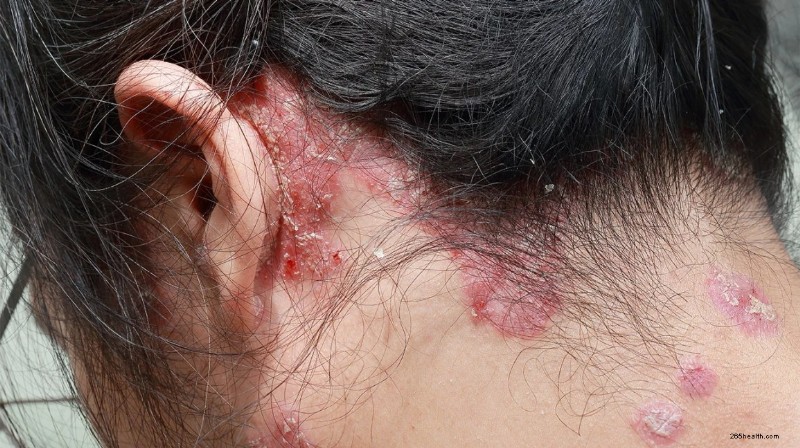
Scalp psoriasis is usually plaque psoriasis, although guttate psoriasis can also affect the scalp. About 80% of people with psoriasis experience scalp involvement at some point.
It can affect the:
- hairline
- forehead
- back of the neck
- skin around the ears
- entire scalp
Symptoms and treatment
Symptoms may include severe dryness, intense itching, dandruff-like scaling, cracking or bleeding, burning or pain, and hair loss.
Applying medication through the hair can be difficult, but medicated shampoos and other topical products are available over the counter or by prescription. Common ingredients include coal tar, salicylic acid, and corticosteroids.
Face, mouth, and eyes
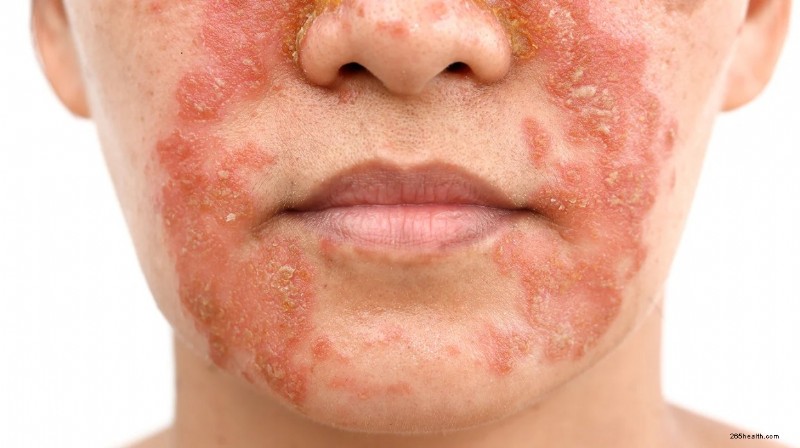
Both plaque and guttate psoriasis can affect the face. Symptoms may include itching, soreness, and increased skin sensitivity. The upper or lower forehead, ears, surrounding skin, and cheeks are commonly affected. Most people with facial psoriasis also have scalp involvement.
In rare cases, psoriasis can develop inside or around the mouth. Oral psoriasis may cause redness, burning, bleeding, or difficulty chewing and swallowing. A physician and dentist should evaluate these symptoms.
Psoriasis around the eyes may cause redness or discoloration, dryness, discomfort, and impaired vision. Any eye involvement—especially vision changes—requires prompt medical assessment. Topical treatments near the eyes should be used only with medical guidance.
Hands and feet
Plaque psoriasis can develop anywhere, including the hands and feet. When it affects the palms and soles, it is often called palmoplantar psoriasis. Symptoms include:
- well-defined areas of raised, thickened skin
- redness or discoloration
- deep cracks or fissures
- pain
- itching or burning
Palmoplantar psoriasis can interfere with mobility and the ability to perform everyday tasks, affecting overall quality of life.
Pustular psoriasis may also develop on the palms and soles. The pustules usually form over red or discolored skin, gradually develop scales, peel away, and may be replaced by new pustules every few days or weeks.
Elbows and knees
Psoriasis on the elbows and knees is typically plaque psoriasis. It appears as raised red, purple, or brown plaques covered by white, silver, or gray scales. These areas can be extremely itchy or painful, and scratching may make the plaques thicker.
Fingernails and toenails
Any form of psoriasis may be associated with nail changes, and about 90% of people with psoriasis experience nail symptoms at some point.
- white, yellow, or brown discoloration beneath one or more nails
- thickened, ridged, pitted, or crumbling nails
- abnormal nail growth
- separation of a nail from the nail bed
Nail psoriasis may indicate psoriatic arthritis. Anyone with nail changes should consider consulting a doctor for an appropriate assessment.
Skin folds
Inverse psoriasis commonly affects:
- armpits
- skin beneath the breasts
- buttocks
- genital area
- skin folds around the groin
It often produces broad areas of smooth, inflamed skin that look deep red or darker than the surrounding area. Symptoms can include intense itching, soreness, burning, and pain. Friction, hot weather, and sweating may worsen symptoms in these areas.
Genitals
Genital psoriasis is reported to affect about 63% of people with psoriasis at some point. Both inverse and plaque psoriasis can affect the genital area, including the:
- vulva
- penis
- scrotum
- skin above the genitals
- crease between the genitals and thighs
- crease between the buttocks
- inner and upper thighs
Itching is the most common symptom. Redness, burning, and pain may also occur. Symptoms can worsen during or after sexual intercourse and may affect sexual well-being, making sensitive-skin care and medical guidance especially important.
Arms, legs, and torso
Plaque and guttate psoriasis can both affect the arms, legs, and torso. Plaque psoriasis produces raised, darkened plaques with scaling, while guttate psoriasis causes numerous smaller, discolored spots.
Forms that affect most of the body
Erythrodermic psoriasis
Erythrodermic psoriasis is rare, affecting about 1% to 2.25% of people with psoriasis. It can be life-threatening and may cause:
- intense redness or discoloration over at least 75% of the body
- scaling and large sheets of skin peeling away
- severe itching and pain
- changes in heart rate
- fever, chills, and dehydration
- nail changes or hair loss
Generalized pustular psoriasis
Generalized pustular psoriasis, also called von Zumbusch psoriasis, is rare but potentially life-threatening. It can begin suddenly, with pustules forming over much of the skin. Within about a day, the pustules may rupture; within another day or two, the skin can dry, peel, and leave a smooth surface.
Other symptoms may include fever, muscle weakness, fatigue, nausea, and tremors. Erythrodermic and generalized pustular psoriasis require immediate medical attention.
Treatment options
The best treatment depends on the type and location of psoriasis, symptom severity, and coexisting conditions such as psoriatic arthritis. Because psoriasis is chronic, long-term management is often necessary.
Topical treatment
Mild-to-moderate psoriasis may be managed with:
- moisturizers, ointments, and creams
- medicated shampoos
- coal tar or salicylic acid
- corticosteroids
- anthralin
- topical retinoids
- vitamin D-based medications
- aryl hydrocarbon receptor agonists
- phosphodiesterase-4 inhibitors
Phototherapy
Phototherapy uses controlled exposure to ultraviolet light to reduce psoriasis symptoms. A clinician may provide treatment in an office or prescribe a phototherapy unit for home use.
Systemic treatment
Widespread or severe psoriasis may require oral medication, injections, or infusions, including:
- acitretin, a synthetic retinoid
- immune-suppressing medicines such as methotrexate or cyclosporine
- biologics that target specific parts of the immune system
- JAK inhibitors that target enzymes involved in the immune response responsible for psoriasis
A doctor can tailor a treatment plan to the specific type, location, and severity of psoriasis. Although psoriasis is usually a long-lasting condition, an increasing number of effective local and systemic treatments can help control symptoms and improve quality of life.
Skin Conditions - Related Articles
- Forehead Acne in Teens: Hormonal Causes, Skincare & When to See a Dermatologist
- Dandruff: Causes, Treatment & Prevention | [Your Brand/Website]
- Atopic Dermatitis (Eczema) Treatment: A Severity-Based Approach
- Understanding and Treating Itching (Pruritus): Causes & Relief
- Alpha Arbutin Lotions: Lighten Skin & Improve Texture | [Your Brand/Site Name]
- Soothing Agents for Eyebrow Shaping: Reducing Irritation and Discomfort
- Talc-Free Baby Powder as a Natural Deodorant: DIY Recipe & Benefits